Sunday, March 29, 2009

Merriweather Post Pavillion - Animal Collective

Rating - 9.3


2009 should be a great year for music, with releases coming from Morissey, Grizzly Bear, The Decemberists and a bevy of other critically acclaimed acts. But just two weeks into the new year Baltimore based noise-pop band Animal Collective released what critics and fans are already praising as a top album this year.


The release, titled Merriweather Post Pavillion (named after a large, outdoors Baltimore venue), is their 9th release is as many years, something very few bands are able to maintain these days. For those who haven’t heard of Animal Collective, the band has three core members David Porter (Avey Tare), Noah Lennox (Panda Bear), and Brian Weitz (Geologist), while 4th member Josh Dibb (Deakin) did not partake in the recording of this record. The adjacent nicknames came about in different ways, but were used most significantly in the bands early live shows (they also wore masks at that time), and each has worked on solo projects and with other bands under those pseudonyms. Most significantly in 2007 Panda Bear released the sprawling and magnificent Person Pitch, which garnered a great deal of critical acclaim (Pitchfork named it the best album of the year). Later that year, Animal Collective released Strawberry Jam, an album which saw their traditionally freak-folk sound wrapped up in slightly more accessible arrangments, with less ambient passages and more scatterbrained hooks.


Merriweather continues this trend, and to its credit finds a delicate balance between the wildness of the Animal Collective catalogue and Panda Bear’s harmony heavy, Beach Boys in space aesthetic. Singers Panda Bear and Avey Tare trade off songs like Lennon and McCartney in their prime, and similarly the albums most significant moments occur when they sing together. Gone are the sudden outbursts of screams, crashing drums, and stylistic changes. Instead, there is a slightly more mature, more gentle Collective here, one that is feeling the pressures of adulthood “My Girls”, supporting the family “Brother Sport”, and the just downright romantic “Bluish”. The latter is one of the most beautiful and surprising songs on the album, managing to wrap traditionally appealing lyrics (“Put on that dress that I like/Its makes me so crazy though I can’t say why”) with pulsating electronics. Another standout track, “Summertime Clothes”, captures a hot night in the city, with Avey Tare and a friend getting high (“With a purple yawn/You’ll be sleeping soon”) and leading a grinding bass synth through the warm summer rain.


Animal Collective have been pushing the limits of electronica and pop for close to a decade, and what started as innocently and drug-related as the Grateful Dead/Timothy Leary scene in the mid 1960s is now an outfit able to tour the world and land their album in the Billboard top 50. They are still making challenging music, and more importantly it is the music they want to make. Animal Collective is one of the few “essential” bands of the past decade, and subsequently so is this album. (2/16/09)

Dylan Blows In!


Tonight at 8pm Robert Zimmerman, better known to the free world as Bob Dylan, will be taking the Alumni Field House stage to a crowd of nearly 4,000 students, faculty, and locals. But, as anyone who has seen Dylan perform in the last seven or eight years would agree, his most impressive feat has already been completed. On October 23rd at 1pm, when tickets to the show went on sale to students, a line extended from the front desk of Hunt Union, around the lounge, out the front doors, down the sidewalk, and almost to the crosswalk near Hayes Hall. Aside from the diehard Dylan fans who arrived at 10am, the line was brimming with Sorority girls, Fraternity gu
ys, Jocks, Hipsters, Scenesters, Potheads, Squares, Up-staters, Down-staters, out-of-staters and everything in-between. The crowd was hundreds strong and before the end of the day all of the 1,000 tickets reserved for students had been sold. For such a musically inclined school, there certainly has not been so much cross campus anticipation for any singular event, any singular person in our history.

But Bob has been unifying people under his music for a long time- over forty years. Dylan, after releasing a debut album of primarily folk and blues standards, made his name with his incredible sophomore album The Freewheelin’ Bob Dylan which included “Blowin’ in the Wind” and “A Hard Rain’s A-Gonna Fall”. These songs, which simply feature Bob’s rustic, Midwest voice, acoustic guitar and harmonica, introduced pop music to lyrics that commented on social rights, forlorn relationships, and other blue-collar issues on a new level. The album was a relative success, and subsequently Bob was “endorsed” by Pete Seeger and the folk communitie
s as their finest, most profoundly spoken member. Dylan created a starker version of “Freewheelin” on its follow-up The Times They Are A-Changin’, which featured more social rights anthems, such as the title track and “When the Ship Comes In”.

However, it was about this time, in late 1964, that Bob began to turn his focus away from the political issues he was addressing and more towards fantastic, complex poetic images. For the first time in his career Dylan started to “change”- an idea and word that he would eventually become synonymous with. In what seemed like an instant, he went from folk singing prodigy, leading musical voice in a social rights revolution, to an electrified, Carnaby street beatnik. With the release of the half acoustic, half electric Bringing it All Back Home, and a shocking performance at the Newport Folk Festival in 1965, Dylan had officially moved on, and created the roots of psychedelic and folk-rock music in the process.

Over the next five years, Dylan would become the ultimate in surreal escapism (Blonde on Blonde) only to trade it in for the hard stories and characters of the Bible, and musically he traded the gritty distortion for authentic Americana (Nashville Skyline). Even now, at 67 years old, Dylan continues to evolve, and has almost come full circle. His recent revival, which was officially established with the 1997 Grammy Album of the Year Time Out Of Mind, through his 2005 effort Modern Times has been comprised of songs that shuffle, bop, and waltz in a manner not unlike the
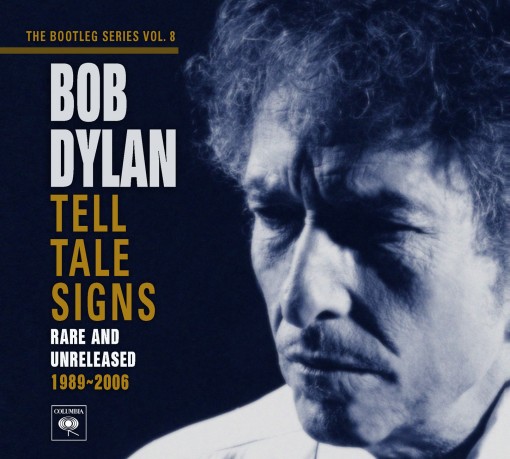
popular songs of the late 1950s and early 1960s that his folk music was originally trying to discern itself from. Last month, Dylan released the eighth installment to his revered Bootlegs Series, a three disc collection chronicling unreleased, alternate, and live tracks from songs during the modern era of his work.

The Bootleg Series Vol. 8: Tell Tale Signs, along with the entire bootleg series, goes a long way in exposing the talent behind Dylan’s song writing. First, there are the previously unreleased songs, including the atmospheric “Dreamin’ of You”, which lyrically serves as something of a companion to “Love Sick”,
a song which made the cut for the Time Out Of Mind album. While the mood on “Dreamin’ of You” is appropriate, other songs show Dylan’s ability to wear several hats, and look good in all of them. Take the song “Mississippi”, which between the Bootlegs series and official albums, has four different versions, ranging from a Caribbean groove to a bluesy, acoustic vamp. Dylan is convincing in every version, conveying his story of two lost lovers trying their best to live together. As is common with most of this collection, he meanders his way around phrases packed with detail and implied dialogue, before finally arriving at the demoralizing conclusion “Only one thing I did wrong/Stayed in Mississippi a day too long”. His alternate versions are generally rougher, sparser arrangements, and with a heavier focus on his vocals and lyrics. The alternates from Oh Mercy, an album which was unfortunately drenched in 1980’s style production, are considerably stronger. The three discs serve to chronicle the maturity in Dylan’s words and voice, as well as his worn and aged delivery, something which is as unfortunate as it is unique.

So when Dylan walks on stage tonight, in the weight of his own shadow, don’t expect him to address the crowd, play guitar, or lead any soaring sing-along. Dylan is the stoic cowboy, the only grandfather in the world who can make a cameo in a Victoria Secret commercial. The unforgiving genius that has never needed more than himself. A man who travels light. He is a mystery among us, Babe Ruth reincarnated. And like Ruth at the end of his career, the mere mention of his name fills concert halls, even if he doesn’t swing like he used to. There is still an excitement, a belief that the man can do anything, and we would only be lucky enough to witness the most recent page in a book of accomplishments. On the wings of a “never-ending” tour, Bob Dylan is out to prove that he is not a wax figure in a museum. Rather, he is the most prolific, humane, and influential songwriter of the last fifty years, the last great American hero, and we are honored to have him. (11/10/08)

Only Way To Be Alone - Good Old War

Rating - 6.3

A couple of weeks ago, a hundred students or so gathered in Hunt Union Ballroom [at SUNY Oneonta] for a concert that featured ex-Early November singer Ace Enders. And while the crowd certainly knew what to expect with Ace’s set (he played here about two years ago as well) it was the band that performed before Ace that proved most impressive.

The band, Good Old War, hails from Philadelphia and they have been one of the most exciting “new” bands to surface this year. I say “new” with a bit of implicitly; all summer they toured as the backing band to Circa Survive front man Anthony Green, they landed a spot on Last Call with Carson Daly, and have been getting support from independent radio stations and record stores from across the country for well over a year. The trio is comprised of two ex-members of successful post-emo outfit Days Away, and one from alt-country band Unlikely Cowboy, and surprisingly they’ve been able to create a totally new sound, one which improves upon both former bands.

Good Old War’s debut record Only Way To Be Alone makes a point of showcasing the bands biggest strength: their incredible three part harmonies. With arrangements that strive for power over complexity, the vocals rise and fall in unison throughout the album, often above an upbeat acoustic guitar and shuffling snare drum. The album, however, finds its stride when the band deviates from this formula, such as the bluesy swagger of “Weak Man” (which features guest vocals from the aforementioned Anthony Green) or the Beatles-meet-Lily-Allen closer “Stay By My Side”.

If there is any criticism to bestow on GOW, its the lack of memorable lyrics. Singer Keith Goodwin spends most of the album making observations on the immediate world around him, including a rocky relationship, but always with a sense of optimism. Good lines come and go , the single “Coney Island” boasts “I counted 27 birds up there today/I’m thinking that’s why I still love it here”, but with musicianship and vocal harmonies this good, who needs lyrics? (11/3/08)

Only By The Night - Kings of Leon

Rating - 2.5

About a minute into the music video for "Sex on Fire", the lead single for the new Kings of Leon album Only By the Night, there is one noticeable difference from their previous work: image. Since their 2006 album "Because of the Times" lead singer Caleb Followill has been primmed, dolled up and in many ways molded for mass consumption. But it wasn't just Caleb and his bros (the band consists of three brothers and a cousin) who were trimmed up, it was also their music.

So what happened? Well, for one they became one of the biggest bands in Great Britain on the wings of the single "On Call" and gave a couple infamous performances at large English festivals. So, perhaps it was the knowledge that their next album would be need to be performed on a larger scale than ever, specifically arenas in Europe, that provoked KoL to turn down the distortion, slow down the tempo, and compromise themselves into a sound that is less like the downbeat groove of the Strokes and more like the "Ohhh-Ahh-Ohhh" anthems of recent Coldplay albums.


Why Caleb feels the need to make his voice whimper between nearly every interval I'll never know, but the trick gets old very quickly. Lyrically, he's gotten no better, and I would venture to say that KoL's lyrics are among the worst in modern rock. Take "Use Somebody", which sounds like a bad Carole King cover, or "17" which provides at least the third major piece of evidence in their short career that Caleb is bonafide white trash. It was obvious to me upon first listen that this release was either a misstep or safe deviation, but it wasn't until one of the albums final cuts "Be Somebody" where Caleb whines "Given a chance...If for one dance/I wanna be somebody" that I knew I was hearing the sound of selling out. (10/26/08)

Skeletal Lamping - of Montreal

Rating - 7.8

“Lamping is the name of a rather dreadful hunting technique where hunters go into the forest at night, flood an area in light, then shoot, or capture, the animals as they panic and run from their hiding places” said Kevin Barnes, of Montreal’s lead singer. So their new album, Skeletal Lamping, refers to Barnes’s own revealing style of songwriting, one that leaves no topic of sexuality untouched. Barnes’s Bowie-esque sexual ambiguity has always been prevalent; on 1997’s Cherry Peel, he proclaimed “Tim, wish you were born a girl/So I could of been your boyfriend”, released a flamboyant concept album in 1999 entitled The Gay Parade, and finally last year on the nearly perfect Hissing Fauna..., Barnes howled “Now that the parachute has opened/Don’t it make you feel good?”. If of Montreal fans thought those were forward statements, then they should be prepared for nearly an hour of funky, scatterbrained sexual innuendos from Barnes on the new record.

Using characters and ideas created on the second half of Hissing Fauna..., the story of Skeletal Lamping revolves around Georgie Fruit, a black soul singer, presumably from the 1970s, who goes through multiple sex changes. Georgie, like Barnes, can’t figure out exactly what he wants. At times he is blunt, saying “We can do it soft-core if you want/But you should know I take it both ways”, but there are also moments of sincerity, such as the standout track “Touched Something’s Hollow” where Barnes laments “Why am I so damaged, girl?/Why am I so troubled, girl?”. In a similar way to “City Bird” from 2003’s Satanic Panic in the Attic, Barnes achieves a dynamic within the album by constantly going over the top, freaking out, cracking a joke, and then crashing to a hung-over moment of mortality. The difference here is he sometimes achieves this model within the length of one song.

With Skeletal Lamping Barnes has definitely delivered a collection brimming with genius, and has solidified his place as one our generation’s foremost creative musicians. However, where his missteps used to start and end within the context of one track, they are now scattered about, disrupting the listener’s enjoyment of the album rather than pulling them further in. Ironically, of Montreal’s best tracks of the year (the acoustic “Feminine Effects” and the M.I.A. cover “Jimmy”) are not included on this album. Finally, as of Montreal have progressed from a psychedelic rock band to a definitive electro-pop group, they have lost much of the muscle in their sound, something which Barnes acknowledges just a few seconds into “Wicked Wisdom” when he shouts “Process it!”. It’s difficult to say where of Montreal will be heading after a sprawling effort like Skeletal Lamping, which is shaping up to be one of the most difficult releases of the year, but as long as Kevin Barnes keeps challenging himself and his audience, they will remain at the forefront of the electro-pop movement.
(10/17/08)

Dear Science - TV on the Radio

Rating - 8.1

Hailing from Brooklyn, TV on the Radio has been the child of the new digital music market. Unlike most of the experimental mainstream acts, who achieved legitimate pop/rock success in the 90s only to reinvent themselves in the new century (Radiohead, Wilco, Beck), TVOTR have become popular because of their experimentation. On their new album, Dear Science, they have found their tightest, most vibrant sound yet, contrasted with their most apocalyptic lyrics.

With the exception of “Family Tree”, the balance of atmosphere before rhythm on 2006’s Return to Cookie Mountain has been alternated, and the result is an instantly more accessible record. The songs pulse and grind, with funky synth and horn stabs, and lead singer Tunde Adebimpe shows off his clean but wild voice, shifting in and out of shouts and falsetto with ease. Tunde and song writing partner Kyp Malone bring in some more familiar sounds on this album, like the Beach Boys vocals that cut through the static of the album opener “Halfway Home” or the Tom Petty-esque chorus of “Shout Me Out”. The Album’s closer “Lover’s Day”, which is complete with the rhythm and woodwind sections of a military marching band, delivers one of the best tongue-in-cheek political statement of the year.

It boils down to an album that is as challenging and fresh as their previous release, but avoids sounding like a reiteration. With crunching beats that wouldn’t sound out of place at a house party, and tons of big choruses, Dear Science is certainly one of the best releases of the year, and gives a rare example of a band actually living up to their hype. On the downside, they are about the 50th band this year to release an album about how messed up our future as a civilization is, and our dependency on technology. Great artists make unique statements, and in a time when there are not many great artists, TV on the Radio are nearly there. (10/2/08)